Vaping is the act of inhaling aerosol produced by an electronic device that heats liquid containing nicotine, flavorings, and other chemicals. It’s a practice legally restricted to adults 21 and older in most jurisdictions, carries documented health risks that are still being studied, and requires understanding both safety protocols and your legal obligations before you start. If you’re here, you’ve likely encountered conflicting claims: manufacturers promoting vaping as a safer alternative to smoking, health advocates warning of unknown long-term dangers, and a flood of misinformation on both sides. The truth sits between these extremes and demands a clear-eyed look at what we actually know in 2026.
This guide cuts through the marketing hype and fear-mongering to deliver factual, evidence-based information. You’ll learn exactly who can legally vape, what the current research shows about health effects, how to acquire products through legitimate channels, what rights you have as a consumer, and where to find authoritative help when you need it. Whether you’re considering vaping for the first time, already using these products and want to ensure you’re doing so safely, or simply trying to separate fact from fiction, you deserve accurate information that respects both the potential risks and your autonomy as an informed adult. Let’s examine what the evidence actually tells us.
What Vaping Really Is: Separating Fact from Fiction
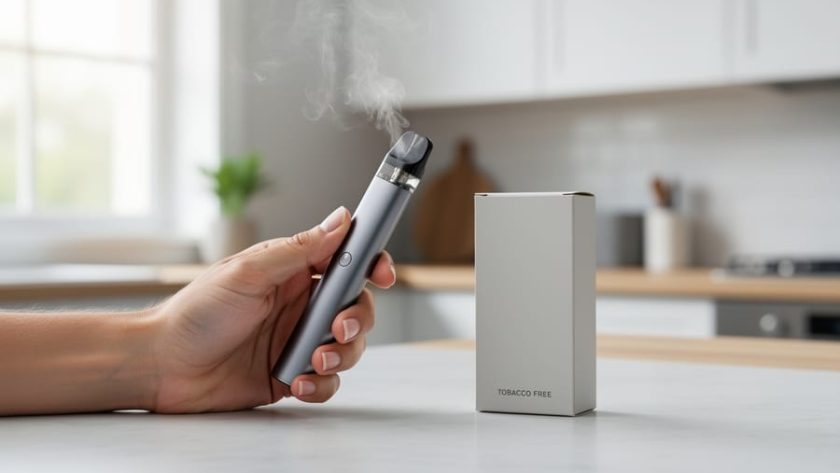
Vaping is the act of inhaling vapor produced by an electronic device that heats a liquid solution, converting it into an aerosol you breathe in and exhale. Unlike traditional cigarettes, vaping devices don’t burn tobacco. Instead, they use a battery-powered heating element, typically a metal coil, to vaporize e-liquid (also called vape juice). This liquid usually contains nicotine, propylene glycol, vegetable glycerin, and flavorings.
Here’s what actually happens when you vape: the device’s battery powers the coil, which heats the e-liquid stored in a tank or cartridge. The heat turns the liquid into vapor, which travels through the mouthpiece to your lungs. You’re inhaling an aerosol, not water vapor or harmless steam, and it contains chemical compounds that your body absorbs.
The fundamental difference between vaping and smoking comes down to combustion. Cigarettes burn tobacco at temperatures exceeding 600°C, creating smoke filled with tar and thousands of chemicals, including many known carcinogens. Vaping devices operate at much lower temperatures, generally between 200°C and 300°C, and produce no smoke or tar because nothing burns. This distinction matters for understanding relative risks, though vaping isn’t risk-free.
Common misconceptions deserve correction. Vaping isn’t “just water vapor”, it’s an aerosol containing nicotine and other chemicals. It’s not completely safe, despite being less harmful than smoking. And while some claim vaping is identical to smoking or equally dangerous, current evidence doesn’t support that equivalence, though long-term effects remain under study.
Devices fall into several categories. Pod systems are compact, user-friendly devices with pre-filled or refillable pods, popular among beginners. Vape pens are slightly larger, pen-shaped devices with refillable tanks. Box mods are advanced devices offering customizable power settings and larger batteries, suited to experienced users. Disposable vapes come pre-filled and ready to use until the e-liquid or battery depletes.
What you’re inhaling includes nicotine (in most e-liquids, though nicotine-free options exist), propylene glycol (produces throat sensation and carries flavor), vegetable glycerin (creates visible vapor clouds), food-grade flavorings, and trace amounts of metals from the heating coil. The specific chemical profile varies by product, which is why purchasing from reputable manufacturers with proper labeling matters for making informed decisions about what enters your body.
Who Can Legally Vape: Age and Eligibility Requirements
Federal and State Age Restrictions
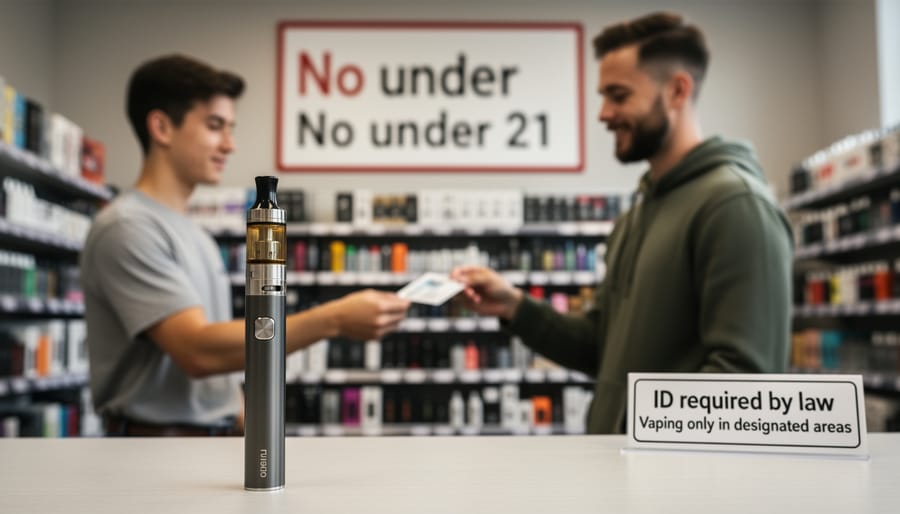
The Tobacco 21 federal law enacted in December 2019, sets 21 as the minimum age to purchase any tobacco product, including vapes, e-cigarettes, and e-liquids, across all U.S. states and territories. This federal requirement applies everywhere, no exceptions. You must be 21 to legally buy vaping products from any retailer, online or in person, and active military personnel receive no exemption under federal law.
However, state laws can add restrictions beyond the federal baseline. Some states enforce additional penalties for underage possession or use, not just purchase. A few states prohibit flavored e-liquids entirely or restrict where vaping products can be sold, such as banning sales near schools. Local municipalities may impose their own age verification procedures or licensing requirements for retailers.
Before you buy, confirm your state’s specific regulations. While 21 is the universal federal minimum, your state might require stricter compliance documentation, impose higher fines for violations, or restrict product types beyond what federal law mandates. Check your state’s tobacco control program website for current local rules that supplement the federal age requirement.
Health-Based Eligibility Considerations
Certain medical conditions make vaping inadvisable or require physician consultation before you start. If you have asthma, COPD, or any chronic respiratory disease, inhaling vaporized substances can trigger symptoms or worsen your condition. The aerosol irritates airways that are already compromised.
People with cardiovascular issues face particular risks. Nicotine raises heart rate and blood pressure, which stresses hearts already managing arrhythmias, hypertension, or previous heart attacks. If you’re on heart medication, nicotine can interact with those drugs.
Pregnant and breastfeeding individuals should avoid vaping entirely. Nicotine crosses the placenta and enters breast milk, affecting fetal development and infant health. No amount is considered safe during pregnancy.
If you have severe allergies, the propylene glycol or vegetable glycerin in e-liquids might trigger reactions. Some flavoring compounds also cause allergic responses in sensitive individuals.
Anyone with a compromised immune system, active lung infection, or recent chest surgery should consult their doctor. Your physician knows your complete health picture and can assess whether vaping compounds existing risks. When in doubt, ask first rather than assuming vaping is safe for your situation.
Where You Can and Cannot Vape
Public vaping laws vary widely by location. Most states prohibit vaping wherever smoking is banned, bars, restaurants, indoor workplaces, and public buildings. Some states treat vaping identically to smoking under clean air acts, while others have separate regulations with different restrictions. Many cities and counties add their own rules, banning vaping in parks, beaches, or outdoor dining areas. Vaping workplace restrictions are increasingly common, with employers prohibiting use on company property entirely or limiting it to designated smoking areas. Private businesses can set stricter policies than local law requires. Schools, hospitals, and government buildings universally prohibit vaping. Before using your device anywhere public, check state, local, and property-specific rules, ignorance isn’t a defense, and violations can result in fines or removal from premises.
How to Start Vaping Safely and Legally: The Complete Process
Step 1: Verify Your Eligibility and Understand the Commitment
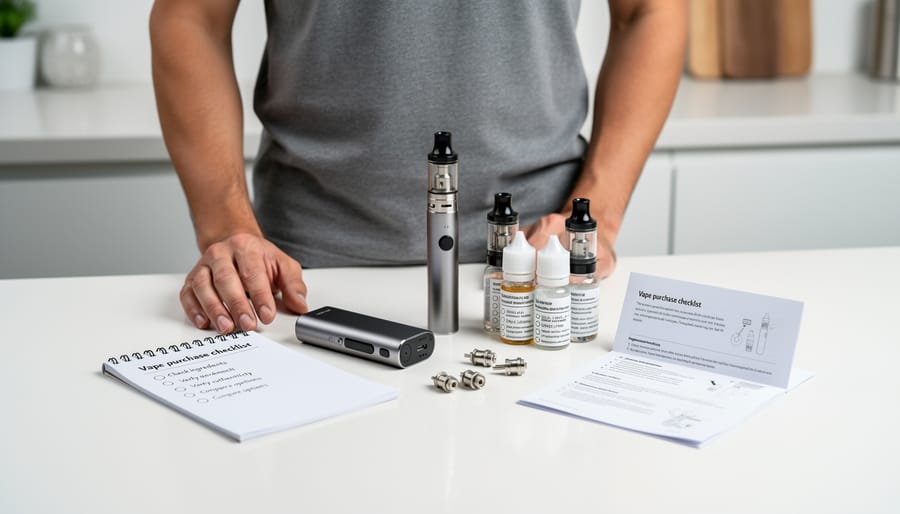
Before you purchase any vaping device or e-liquid, confirm you’re at least 21 years old, this is federal law across all states. You’ll need to show government-issued ID at any legitimate retailer, online or in-store. Beyond age, honestly assess whether vaping aligns with your health situation. If you have respiratory conditions, heart disease, are pregnant, or take medications that affect heart rhythm or blood pressure, consult your physician first. Vaping isn’t risk-free nicotine delivery.
Understand what you’re starting: nicotine is highly addictive, and regular vaping creates ongoing costs for devices, coils, and e-liquids. You’re also accepting responsibility for safe battery handling, proper disposal, and staying current with changing regulations. This isn’t a casual decision, it’s a commitment to informed, legal, and safe practices.
Step 2: Choose the Right Device for Your Needs
Your first device should match your experience level and simplify the learning curve, not complicate it. Beginners overwhelmingly succeed with closed-system pod devices or simple pod mods because they eliminate variables like wattage adjustment, coil building, and complex settings that can frustrate newcomers.
Closed pod systems use pre-filled cartridges you simply click into place. They’re draw-activated (no buttons), maintenance-free, and most closely mimic the hand-to-mouth motion of smoking. Brands like JUUL and Vuse offer this simplicity, though you’re locked into their specific pods and flavors.
Open pod systems let you refill with any compatible e-liquid, giving you flavor freedom while keeping operation straightforward. Most feature one-button operation and require only periodic coil replacement every two to three weeks.
Box mods and advanced devices offer power control, temperature settings, and customization options that experienced vapers value but beginners don’t need. These require understanding ohm’s law, battery safety protocols, and coil resistance, knowledge you’ll build over time if you stay with vaping.
Start simple. You can always upgrade to advanced equipment once you understand the fundamentals and know whether vaping suits your needs.
Step 3: Purchase from Licensed, Reputable Retailers
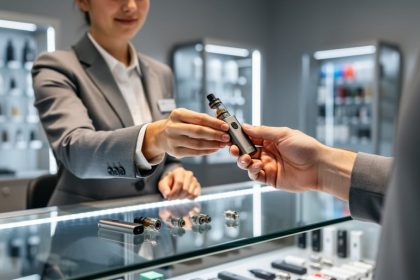
Only purchase vaping products from retailers licensed by your state and verified as legitimate businesses. In physical stores, look for posted tobacco retail licenses, proper product displays behind counters or in secured areas, and staff trained in age verification. Legitimate shops will always request government-issued ID, even if you appear well over 21, and many use electronic ID scanners that verify authenticity and record the transaction.
For online purchases, verify the retailer operates legally by checking for age verification systems at checkout, physical business addresses (not just P.O. boxes), and compliance statements referencing FDA regulations. Reputable online stores use third-party age verification services that cross-reference your information against public records before completing sales. Expect to provide your full name, date of birth, and sometimes the last four digits of your Social Security number. Some states prohibit online vaping product sales entirely, so confirm your location allows delivery before ordering.
Avoid sellers who don’t verify age, offer prices significantly below market rates, or sell from unregulated platforms like social media marketplaces. These sources frequently distribute counterfeit or contaminated products that bypass all safety standards.
Step 4: Select Appropriate E-Liquids and Nicotine Levels
Nicotine strength makes the biggest difference in your vaping experience and health impact. E-liquids range from 0 mg (nicotine-free) to 50+ mg in salt nicotine formulations. Former smokers typically start at 3-6 mg freebase nicotine or 20-35 mg nicotine salts, then adjust based on cravings and throat sensation. Starting too high causes dizziness and nausea; too low leaves you unsatisfied and vaping excessively.
Choose flavors from manufacturers who disclose full ingredient lists and test for harmful additives like diacetyl and vitamin E acetate. Reputable brands provide batch testing results and use food-grade flavorings designed for inhalation. Avoid suspiciously cheap liquids or exotic flavors from unknown sources.
Counterfeit e-liquids pose serious risks. Purchase only from licensed retailers who verify product authenticity through manufacturer codes or authorized distributor networks. Warning signs of fakes include misspelled brand names, missing batch numbers, unnaturally low prices, and packaging that differs from manufacturer images. When in doubt, verify directly with the brand before using any e-liquid. Your lungs depend on product integrity.
Step 5: Set Up Your Device Safely
Setting up your device correctly prevents malfunctions and safety hazards. Start by reading the manufacturer’s instructions completely before assembling anything. Insert batteries with terminals aligned to the diagram inside the battery compartment, reversed batteries can cause venting or fires. If your device uses an external charger, never charge batteries inside the device itself.
Prime new coils by adding several drops of e-liquid directly onto the exposed cotton, then let the filled tank sit for five minutes before first use. This prevents dry hits that burn the coil instantly. Set wattage to the lower end of your coil’s recommended range (printed on the coil itself), then increase gradually. Start with airflow fully open and adjust to preference. Check all seals and connections are hand-tight but not over-torqued, which can strip threads or crack tanks.
Your Rights and Responsibilities as a Vaper
Consumer Rights and Product Standards
Federal law requires all vaping products sold in the U.S. to receive premarket authorization from the FDA before going on sale. This means manufacturers must prove their products meet public health standards. Any device or e-liquid you purchase legally should have undergone this review process, though enforcement remains imperfect.
You have the right to accurate product labeling. E-liquid bottles must display nicotine content in milligrams per milliliter, list all ingredients, include nicotine warning statements, and show the manufacturer’s contact information. Devices should come with user manuals explaining proper operation and battery specifications. If packaging lacks this information or appears tampered with, don’t buy it.
Manufacturers must follow good manufacturing practices, including quality control testing and contamination prevention. Products should arrive sealed, with batch numbers that allow traceability if problems emerge.
When you encounter a defective or dangerous vaping product, report it to the FDA through their Safety Reporting Portal at . Include the product name, manufacturer, batch number, and detailed description of the problem. You can report anonymously. For immediate safety concerns like battery venting or chemical burns, contact the Consumer Product Safety Commission at .
Your state attorney general’s office handles consumer protection complaints about fraudulent sales, false advertising, or retailers selling to minors. Document everything: save receipts, take photos of defects, and note the purchase date and location. These reports help regulators identify dangerous products and enforce standards that protect all vapers.
Legal and Social Responsibilities
Vaping legally means more than just being old enough to buy products. You’re required to follow all applicable laws in your jurisdiction, which often extend beyond purchase age. Many states and municipalities have designated vaping as prohibited in the same locations where smoking is banned, indoor workplaces, restaurants, bars, public transportation, and areas near building entrances. Some jurisdictions go further, banning vaping in parks, beaches, or anywhere on school grounds. Violating these restrictions can result in fines ranging from $50 to several hundred dollars, and repeated violations may lead to criminal penalties in some areas. You’re responsible for knowing the specific rules where you live, work, and travel.
Respecting non-vapers isn’t just courtesy, it’s increasingly a legal requirement. Even where outdoor vaping is permitted, you should maintain distance from doorways, bus stops, and crowded spaces. Secondhand vapor contains nicotine and other chemicals that can affect bystanders, particularly children, pregnant individuals, and those with respiratory conditions. Never vape in someone’s home or vehicle without explicit permission, and always defer to property owners’ rules, even if they exceed legal minimums.
You have a serious obligation to prevent youth access to your vaping products. Store devices and e-liquids in locked locations inaccessible to minors. Never purchase products on behalf of someone underage, doing so is a criminal offense in all states, with penalties including fines up to $1,000 and potential jail time. If you’re a parent who vapes, model responsible use and have age-appropriate conversations about nicotine risks.
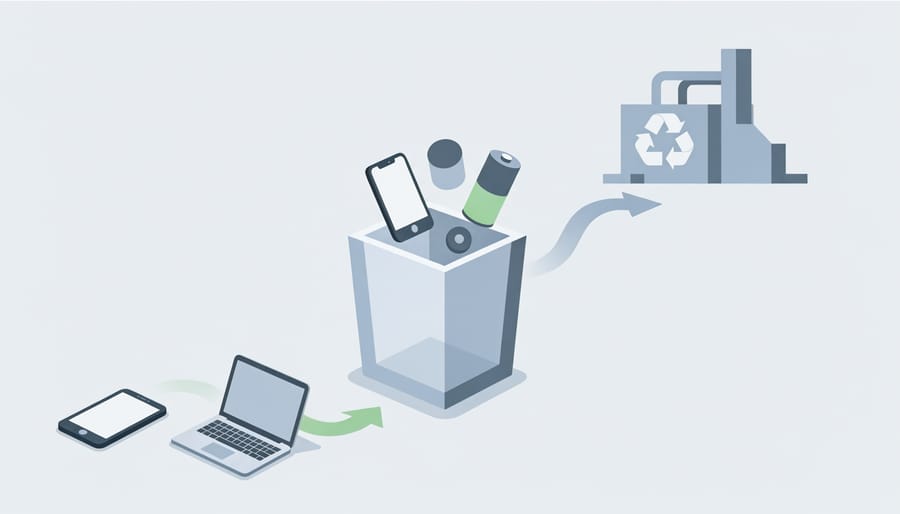
Proper disposal is both a legal and environmental responsibility. Lithium-ion batteries from vaping devices are classified as hazardous waste in most jurisdictions and cannot go in household trash. Take spent devices and batteries to designated e-waste recycling centers or retailer take-back programs. Improper disposal risks fires in waste facilities and environmental contamination.
The Health Truth: What Research Shows in 2026
Scientific research on vaping has advanced significantly, but critical gaps remain. The evidence presents a nuanced picture: certain risks are well-established, some areas show promise for harm reduction, and many long-term health effects are still under investigation.
Established Health Risks
Nicotine addiction represents the most certain risk. Vaping products deliver nicotine as effectively as combustible cigarettes, and nicotine is highly addictive regardless of delivery method. The American Heart Association confirms that nicotine raises blood pressure, increases heart rate, and causes adrenaline release, stressing the cardiovascular system. Regular vapers develop dependence comparable to smokers, experiencing withdrawal symptoms when they stop.
Respiratory effects are documented but vary by individual. Studies consistently show that vaping can irritate airways and cause inflammation, particularly in people with asthma or other lung conditions. Some users report coughing, wheezing, and shortness of breath. The long-term impact on lung tissue remains an active research area, but acute irritation is confirmed.
Cardiovascular research shows concerning patterns. Vaping raises heart rate and blood pressure immediately after use. Studies published through 2025 link regular vaping to increased risk of heart attack and stroke, though the mechanisms differ from smoking. The extent of vascular damage compared to smoking continues to be investigated, but cardiovascular stress is measurable.
Harm Reduction Evidence
The harm reduction question matters most for current smokers. Public Health England and the Royal College of Physicians have maintained that vaping is substantially less harmful than smoking combustible tobacco, estimating around 95% reduced harm based on toxicant exposure. Switching completely from smoking to vaping eliminates exposure to tar and most carcinogens produced by combustion.
However, “less harmful than smoking” does not mean safe. Former smokers who switch to vaping reduce their exposure to many toxins but continue nicotine addiction and face vaping-specific risks. Dual use (both smoking and vaping) provides minimal health benefit.
What Remains Unknown
Long-term health outcomes cannot yet be fully assessed. Vaping became widespread only in the past fifteen years, so researchers lack the decades of data available for smoking. Cancer risk, chronic respiratory disease development, and cumulative cardiovascular effects over thirty to forty years of vaping remain under study. Current evidence suggests vaping carries lower cancer risk than smoking, but confirming this requires more time.
The effects of specific flavoring chemicals need further research. While most e-liquid ingredients are food-safe, their safety when heated and inhaled repeatedly over years has not been comprehensively studied. Some flavorings previously considered safe for ingestion have shown lung toxicity when inhaled.
Make decisions based on what is currently known, not what might eventually be proven. The evidence supports vaping as a less harmful alternative for smokers who cannot quit otherwise, but it clearly establishes that non-smokers should not start vaping.
Safety Practices Every Vaper Must Know
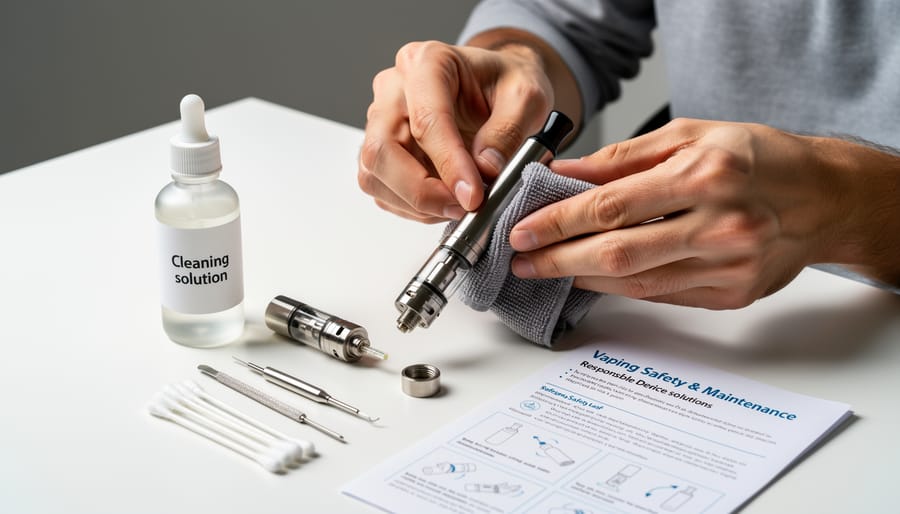
Safe vaping requires deliberate attention to equipment, materials, and maintenance. Battery-related incidents remain the most serious safety concern, but most risks are entirely preventable when you follow established protocols and recognize warning signs before problems escalate.
Battery Safety Comes First
Lithium-ion batteries power most vaping devices, and mishandling them can lead to thermal runaway, fires, or explosions. Always use the charger designed for your specific device, never an aftermarket substitute. Charge on a hard, non-flammable surface away from bedding or paper, and never leave batteries charging overnight or unattended. Inspect batteries before each use: any dent, tear in the wrap, or exposed metal means immediate replacement, not continued use. Carry spare batteries in a plastic case, never loose in pockets or bags where coins or keys could create a short circuit.
Core Safety Rules
- Store batteries in dedicated cases at room temperature, away from direct sunlight and heat sources
- Inspect your device weekly for cracks, loose connections, or corrosion on battery contacts
- Keep e-liquids in childproof bottles, locked away from children and pets, nicotine is toxic when ingested
- Purchase only from licensed retailers with verifiable supply chains to avoid dangerous counterfeits
- Clean tank components and mouthpieces weekly with warm water; replace coils when flavor changes or vapor production drops
- Replace worn o-rings, damaged glass tanks, and frayed charging cables immediately, degraded parts cause leaks and shorts
Counterfeit devices and e-liquids pose serious risks because they bypass safety testing and may contain harmful contaminants or faulty electronics. Authentic products include verification codes you can check on the manufacturer’s website, holographic labels, and professionally printed packaging without spelling errors. If the price seems too good or the seller can’t provide receipts, walk away.
Recognize Warning Signs
Stop using your device immediately if it becomes unusually hot during normal use, makes hissing or popping sounds beyond typical coil crackling, leaks persistently despite fresh seals, or delivers inconsistent vapor. A burning taste means your coil is spent or you’ve vaped the tank dry, continuing damages both the coil and your lungs. If e-liquid contacts your skin, wash immediately with soap and water; if swallowed, call Poison Control at 1-800-222-1222 right away.
Never attempt to modify device circuitry or use incompatible components. The engineering tolerances exist for your protection, and bypassing them removes safeguards against overheating and battery failure.
Where to Get Help, Information, and Support
Finding reliable, current information about vaping regulations, safety, and health is essential for responsible use. Here’s where to turn when you need authoritative guidance, want to report a problem, or require immediate help.
The FDA’s Center for Tobacco Products maintains the most comprehensive federal resource on vaping regulations at . You’ll find current manufacturing standards, authorized product listings, flavor restrictions, and enforcement updates. The site includes a reporting mechanism for adverse events, counterfeit products, and violations. Check quarterly for regulatory changes that affect what you can legally purchase.
For nicotine poisoning emergencies or accidental e-liquid exposure, contact Poison Control immediately at 1-800-222-1222 or use their online tool at . This service operates 24/7 with toxicology experts who provide specific guidance for nicotine overdose symptoms, which can escalate quickly in children or with concentrated liquids.
State tobacco control programs often maintain stricter standards than federal law. The CDC’s State Tobacco Activities Tracking and Evaluation System at provides links to your state’s program, where you’ll find local age verification requirements, flavor bans, tax rates, and public use restrictions that vary significantly by location.
If you’re using vaping to quit smoking, the National Cancer Institute’s offers evidence-based cessation support, though it emphasizes FDA-approved methods. For personalized coaching that acknowledges vaping as a harm reduction tool, 1-800-QUIT-NOW connects you to your state’s quitline with counselors trained in multiple cessation approaches.
Consumer complaints about defective devices, false advertising, or retailer violations go to the Federal Trade Commission at and your state attorney general’s consumer protection division. Document the issue with photos, receipts, and product details before filing.
For ongoing education, the Truth Initiative provides research summaries at, though their abstinence focus may not align with harm reduction perspectives. Balance this with peer-reviewed studies in journals like Nicotine and Tobacco Research for less advocacy-driven science.
Your local health department can answer questions about workplace and housing vaping policies, and many offer free consultations on nicotine dependence regardless of your cessation method.
Common Questions About Vaping Truth and Safety
Is vaping safer than smoking cigarettes?
Current evidence suggests vaping is less harmful than combustible cigarettes because it eliminates tar and many carcinogens produced by burning tobacco, but it is not risk-free. Vaping still delivers nicotine and exposes users to potentially harmful chemicals, so while it may reduce harm for current smokers switching completely, it introduces risks for non-smokers who would otherwise avoid nicotine entirely.
What exactly is in e-liquid?
E-liquids typically contain four main ingredients: propylene glycol or vegetable glycerin as base liquids, nicotine in varying concentrations, and food-grade flavorings. Reputable manufacturers list all ingredients on their labels, though the long-term effects of inhaling some flavoring compounds remain under study.
How do I know if a vaping product is safe to use?
Purchase only from licensed retailers who verify your age and sell products from established manufacturers with transparent ingredient lists and quality testing. Avoid street-market THC cartridges, counterfeit products, or devices with no branding or ingredient information, as these have been linked to serious lung injuries.
What should I do if I experience side effects from vaping?
Stop using the device immediately if you develop chest pain, difficulty breathing, severe coughing, nausea, or dizziness. Seek medical attention for serious symptoms and report the product to the FDA’s Safety Reporting Portal so regulators can track potential hazards.
Are flavored e-liquids banned?
Federal regulations prohibit flavored cartridge-based e-cigarettes except tobacco and menthol, but flavored e-liquids for refillable tank systems remain legal in most states. Some states and cities have enacted broader flavor bans, so check your local regulations before purchasing.
How do I properly dispose of vape devices and batteries?
Never throw lithium-ion batteries in regular trash, as they pose fire hazards in landfills and garbage trucks. Take used devices and batteries to designated e-waste recycling centers, battery drop-off locations at retailers, or hazardous waste collection events in your community.
These questions reflect the most common uncertainties people have when trying to separate vaping facts from marketing claims or scare stories. Understanding that vaping exists on a harm spectrum rather than being simply safe or dangerous helps you make decisions appropriate to your situation. If you have never used nicotine products, starting to vape introduces risks without benefits. If you currently smoke and are considering switching completely, the calculus differs.
The truth about safety extends beyond the device itself to how you use it, where you purchase products, and how you respond to your body’s signals. No FAQ can cover every individual circumstance, which is why consulting healthcare providers about your specific health conditions and staying informed through official regulatory channels matters. Misconceptions often stem from incomplete information or outdated research, so approach vaping decisions with current evidence and a clear understanding of what is known versus what remains uncertain in 2026.